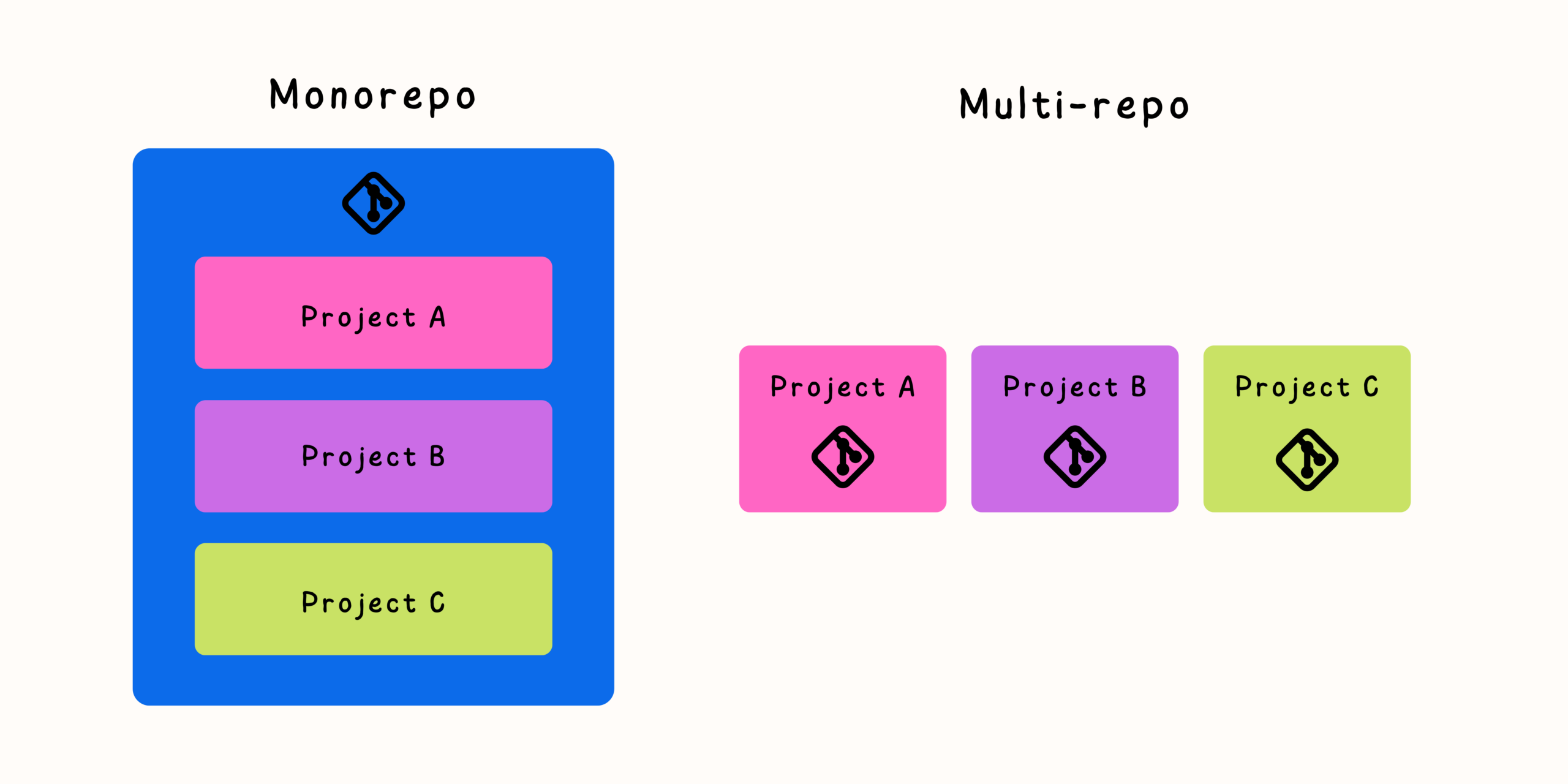
Repository architecture is one of the most important decisions software teams make as their projects grow. The choice between a monorepository (monorepo) and a multi-repository (multi-repo) approach affects how developers collaborate, manage dependencies, organize code, and deliver software.
Small teams can often work successfully with almost any repository structure. However, as organizations scale, repository decisions have a major impact on productivity, developer experience, and engineering efficiency.
A monorepo can simplify collaboration by keeping related projects together, while a multi-repo strategy provides stronger separation and independence between codebases. Neither approach is universally better—the right choice depends on team structure, project complexity, release processes, and long-term goals.
What Is a Monorepository?
A monorepository is a single Git repository that contains multiple projects, services, libraries, or applications.
Instead of managing separate repositories for each component, teams store related code in one shared location.
A typical monorepo structure may look like:
company-platform/
├── applications/
│   ├── web-app/
│   ├── mobile-app/
│   └── admin-panel/
├── services/
│   ├── api/
│   ├── authentication/
│   └── payments/
├── packages/
│   ├── ui-components/
│   ├── shared-utils/
│   └── configuration/
└── tools/
In this model, developers can access the entire system from one repository.
Advantages of Monorepositories
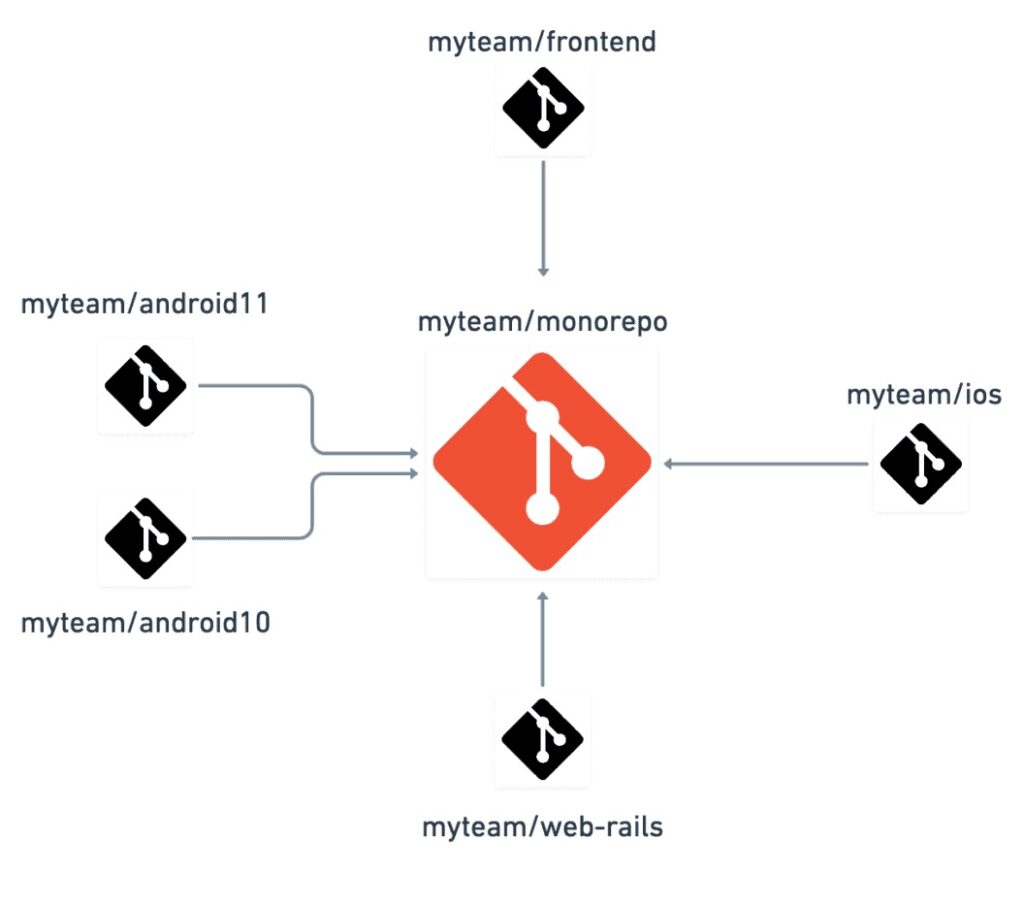
Monorepos have become increasingly popular among large engineering organizations because they solve many collaboration challenges.
Easier Code Sharing
When multiple projects use common components, sharing code becomes much simpler.
Developers can directly import:
- Shared libraries
- UI components
- Internal tools
- Configuration files
- Common utilities
There is no need to publish packages or synchronize changes between repositories.
Atomic Changes Across Projects
One of the biggest advantages of a monorepo is the ability to make related changes in a single commit.
For example:
- Update a shared API.
- Modify the backend service.
- Update the frontend application.
- Adjust tests.
All changes can be reviewed and merged together.
This avoids situations where multiple repositories must be updated separately and coordinated manually.
Simplified Dependency Management
With a monorepo, dependencies are easier to track because everything exists in one place.
Teams can:
- Update shared libraries together
- Detect breaking changes earlier
- Run global tests
- Maintain consistent versions
This reduces dependency conflicts and integration problems.
Better Developer Onboarding
New developers often struggle to understand how multiple repositories connect.
A monorepo provides:
- One repository to clone
- One development environment
- One source of documentation
- One place to find related code
This reduces the time needed for new team members to become productive.
What Is a Multi-Repository Architecture?

A multi-repository approach separates projects into independent Git repositories.
For example:
repositories/

├── frontend-app
├── backend-api
├── authentication-service
├── payment-service
├── shared-library
└── infrastructure
Each repository has its own:
- Git history
- Issues
- Pull requests
- Access permissions
- Release process
This approach has traditionally been the default for many organizations.
Advantages of Multi-Repositories
Multi-repo architectures provide benefits that are especially valuable for independent teams and products.
Strong Project Separation
Each repository has clear boundaries.
This works well when projects:
- Have different owners
- Have separate customers
- Use different technologies
- Follow different release cycles
Teams can make decisions independently without affecting unrelated projects.
Independent Releases
A major advantage of multi-repos is release flexibility.
Each project can have its own:
- Versioning strategy
- Deployment schedule
- Maintenance cycle
- Release pipeline
For example, a payment service can release updates without requiring changes to the main application repository.
Better Access Control
Separate repositories make permission management easier.
Organizations can control:
- Who can view code
- Who can merge changes
- Who manages releases
This can be important for companies with security requirements or external contributors.
Smaller Repository Size
Large monorepos can become extremely large over time.
Multi-repos keep individual repositories smaller, making:
- Cloning faster
- Searching easier
- Local development lighter
This can be especially useful for teams working on isolated services.
Common Challenges of Monorepositories
Although monorepos provide many advantages, they also introduce new challenges.
Repository Size and Performance
Large monorepos may contain millions of files and years of history.
Teams may need specialized tools and practices such as:
- Partial cloning
- Build caching
- Incremental testing
- Dependency-aware builds
Without proper tooling, repository operations can become slow.
More Complex CI/CD Systems
A monorepo requires intelligent build systems to avoid rebuilding everything after every change.
Teams often need:
- Affected-project detection
- Parallel builds
- Selective testing
- Advanced caching
A simple CI pipeline may become inefficient.
Code Ownership Challenges
When many teams share one repository, ownership must be clearly defined.
Organizations need systems for:
- Ownership rules
- Review requirements
- Team boundaries
- Contribution guidelines
Without structure, teams may accidentally modify areas they do not understand.
Common Challenges of Multi-Repositories
Multi-repos also introduce operational complexity.
Dependency Synchronization
When multiple repositories depend on each other, updates become difficult.
For example:
- Backend API changes.
- Frontend application needs updates.
- Shared library requires a new version.
- Documentation must be updated.
Each repository requires coordination.
Duplicate Configuration
Teams often repeat the same setup across repositories:
- CI workflows
- Development tools
- Linting rules
- Documentation patterns
- Build configurations
Over time, these differences create maintenance problems.
Slower Large-Scale Refactoring
Changing a shared concept across multiple repositories can be difficult.
A simple rename may require:
- Updating one repository.
- Publishing a new package version.
- Updating dependent repositories.
- Fixing compatibility issues.
- Coordinating releases.
Large refactors become slower and riskier.
Monorepo vs. Multi-Repo: A Practical Comparison
| Area | Monorepo | Multi-Repo |
|---|---|---|
| Code sharing | Easier | Requires packages or synchronization |
| Repository size | Larger | Smaller |
| Team independence | Lower | Higher |
| Dependency management | Centralized | Distributed |
| Large refactoring | Easier | More complex |
| Access control | More complex | Simpler |
| Releases | Often coordinated | Independent |
| Onboarding | Usually easier | Can be more fragmented |
| CI/CD complexity | Higher at scale | Distributed complexity |
When Should You Choose a Monorepo?
A monorepo is often a good choice when:
- Projects frequently share code.
- Teams work closely together.
- Changes often affect multiple applications.
- Consistency is important.
- Developers need visibility across the system.
- The organization values simplified collaboration.
Examples include:
- Product platforms
- Full-stack applications
- Internal tools ecosystems
- Large interconnected services
When Should You Choose Multi-Repositories?
A multi-repo approach is often better when:
- Projects are independent.
- Teams release separately.
- Different access permissions are required.
- Products have separate lifecycles.
- Services are owned by different organizations.
Examples include:
- Microservice ecosystems
- Open-source projects
- External integrations
- Independent products
Hybrid Approaches: Combining Both Strategies
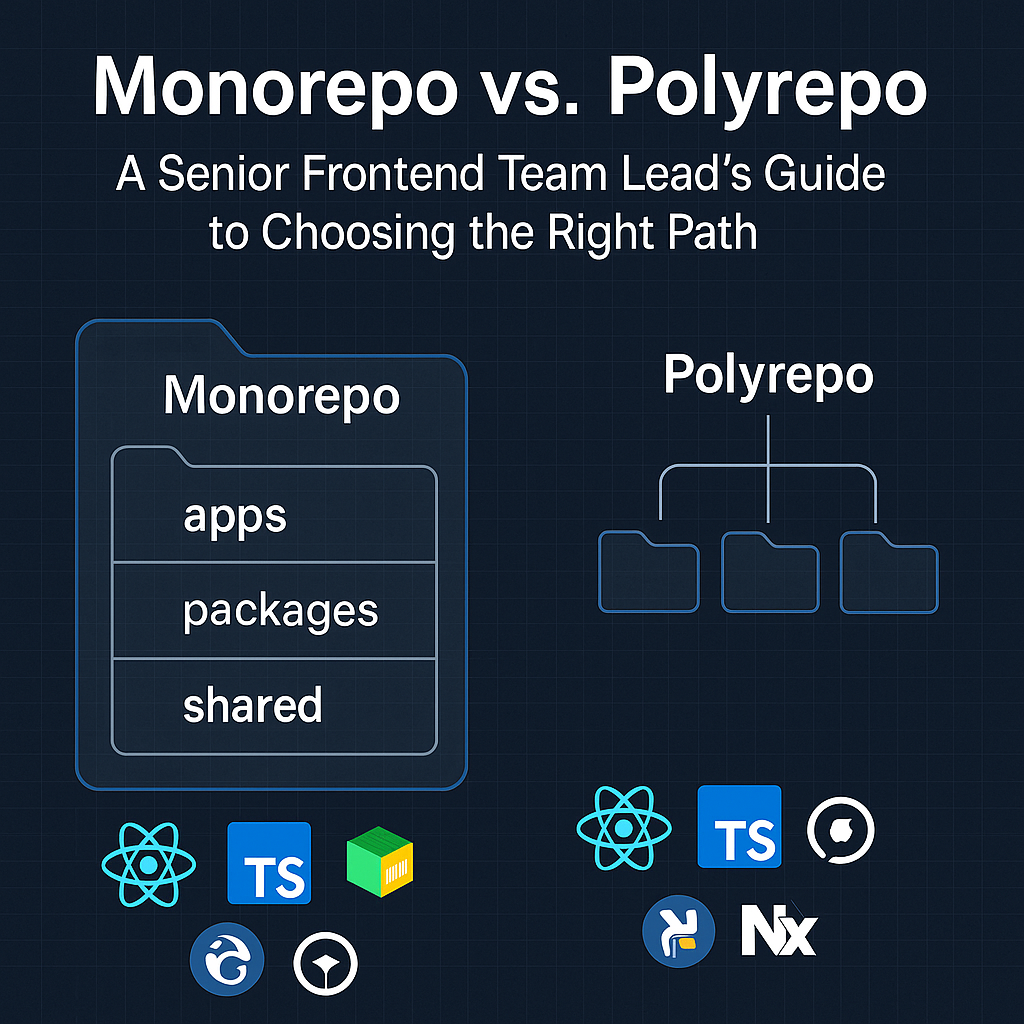
Many organizations do not choose a pure monorepo or pure multi-repo model.
A hybrid approach can provide flexibility.
Examples include:
- A monorepo for internal applications and shared tools.
- Separate repositories for public libraries.
- Independent repositories for external services.
- Package publishing for stable shared components.
This allows teams to keep collaboration simple while maintaining necessary boundaries.
How to Decide Which Architecture Fits Your Team
Before choosing a repository strategy, consider these questions:
How Often Do Projects Change Together?
If developers frequently modify multiple projects at once, a monorepo may reduce friction.
How Independent Are Your Teams?
If teams operate separately with different goals, multi-repos may provide better autonomy.
How Important Is Fast Collaboration?
Organizations focused on rapid iteration often benefit from centralized code visibility.
How Mature Are Your Development Tools?
Large monorepos require strong CI/CD, build systems, and dependency management practices.
How Do You Manage Shared Code Today?
If teams already struggle with package versions, synchronization, and duplicated code, a monorepo may solve those problems.
Final Thoughts
The decision between monorepositories and multi-repositories is not simply a technical choice—it is a decision about how teams collaborate.
Monorepos optimize for visibility, shared development, and large-scale collaboration. Multi-repos optimize for independence, isolation, and separate ownership.
The best architecture is the one that matches your team’s workflow, not the one that is currently popular. Some organizations thrive with a single unified repository, while others require clear boundaries between projects.
As software systems become more interconnected, many teams are moving toward flexible approaches that combine the strengths of both models. The key is creating a repository structure that reduces friction, improves collaboration, and helps developers deliver better software faster.


Related Posts