Modern software systems are rarely built as isolated projects. Even when teams use multiple Git repositories, applications are usually connected through shared libraries, APIs, infrastructure components, configuration files, and internal tools.
As organizations scale, managing these relationships becomes increasingly difficult. A change in one repository can affect several others, creating challenges around versioning, compatibility, testing, and releases.
Effective dependency management is what allows teams to keep the flexibility of multiple repositories without creating unnecessary coordination problems. With the right practices, organizations can maintain independent development while ensuring that connected systems remain reliable.
Why Git Repository Dependencies Become Complex
At a small scale, repository dependencies are easy to manage. A developer updates a shared library, changes an application, and everything works.
The complexity appears when:
- Multiple teams depend on the same components.
- Repositories have independent release cycles.
- Shared code changes frequently.
- Services communicate through APIs.
- Different environments require different versions.
A typical dependency chain may look like:
frontend-app
      |
      v
backend-api
      |
      v
authentication-library
      |
      v
database-service
Each connection creates a potential synchronization point.
Without a clear dependency strategy, teams often experience:
- Unexpected breaking changes
- Outdated dependencies
- Difficult upgrades
- Slow releases
- Increased debugging time
Understand Different Types of Repository Dependencies
Not all dependencies should be managed the same way.
Understanding the type of relationship helps determine the right strategy.
Shared Code Dependencies
These occur when multiple repositories use the same code.
Examples include:
- Utility libraries
- UI components
- Internal frameworks
- SDKs
Common management approaches:
- Package managers
- Monorepositories
- Versioned libraries
API Dependencies
These occur when one service depends on another service’s interface.
Examples:
- REST APIs
- GraphQL schemas
- Message formats
- Service contracts
Common management approaches:
- API versioning
- Contract testing
- Schema validation
Infrastructure Dependencies
These include shared operational resources.
Examples:
- Deployment templates
- Infrastructure modules
- Configuration standards
Common management approaches:
- Infrastructure-as-code modules
- Shared templates
- Automated validation
Use Versioned Dependencies Instead of Direct Links
One of the most important dependency management principles is avoiding hidden relationships.
Instead of directly depending on another repository’s latest code, use explicit versions.
For example:
{
  "shared-components": "3.2.1"
}
This provides:
- Predictable builds
- Reproducible environments
- Easier debugging
- Controlled upgrades
Teams should know exactly which version of a dependency their application uses.
Follow Semantic Versioning Principles
Semantic versioning provides a common language for dependency changes.
A typical version format:
MAJOR.MINOR.PATCH
Meaning:
Major Version
Breaking changes.
Example:
2.0.0 → 3.0.0
Applications may require code changes.
Minor Version
New backward-compatible features.
Example:
2.1.0 → 2.2.0
Existing users should continue working.
Patch Version
Bug fixes.
Example:
2.1.0 → 2.1.1
No expected behavior changes.
Clear versioning reduces confusion between teams.
Avoid Depending on Unstable Code
A common mistake is allowing production applications to depend on constantly changing development branches.
For example:
application → shared-library main branch
This creates unpredictable behavior.
A better approach:
application → shared-library version 1.5.0
Stable releases provide confidence and make troubleshooting easier.
Automate Dependency Updates
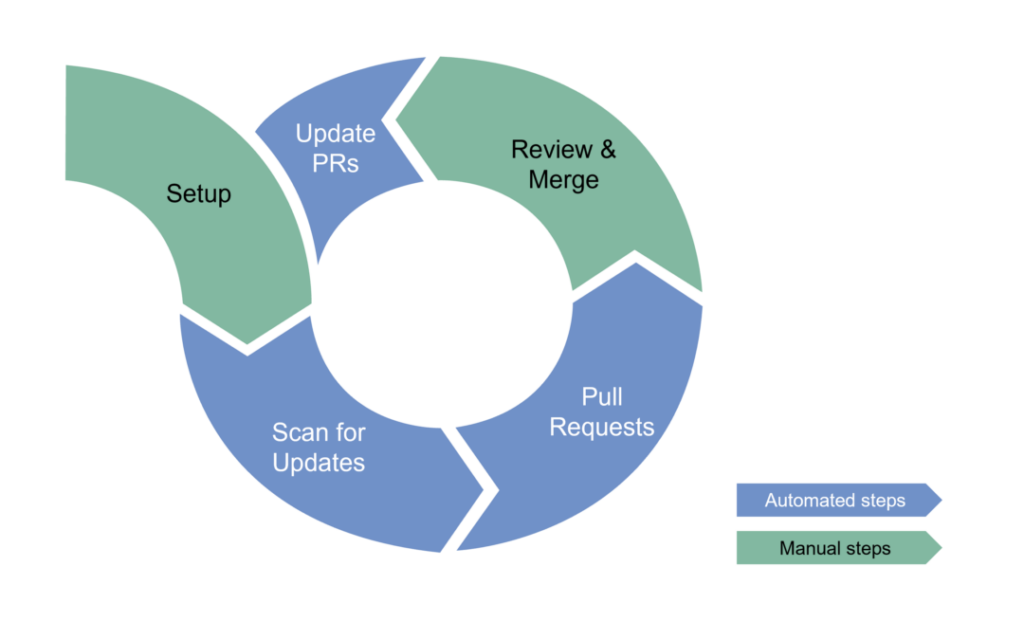
Manual dependency management does not scale.
As repositories grow, teams should automate:
- Dependency discovery
- Update notifications
- Pull request creation
- Compatibility checks
- Security scanning
Automation helps teams stay current without requiring constant manual monitoring.
Benefits include:
- Faster updates
- Reduced technical debt
- Fewer outdated dependencies
- Improved security
Maintain a Dependency Inventory
Teams should know what depends on what.
A dependency inventory helps answer questions like:
- Which applications use this library?
- Who owns this dependency?
- What versions are currently deployed?
- Which systems are affected by a change?
Useful information includes:
- Repository relationships
- Package versions
- Owners
- Criticality
- Update frequency
Visibility is essential for large engineering organizations.
Establish Clear Ownership
Every shared dependency should have a responsible team.
Ownership should define:
- Maintainers
- Reviewers
- Release responsibility
- Support expectations
Without ownership, shared components often become neglected.
A simple ownership model:
shared-auth-library
Owner: Identity Team

ui-components
Owner: Frontend Platform Team

deployment-tools
Owner: Infrastructure Team
Clear responsibility speeds up decision-making.
Use Automated Compatibility Testing
Version numbers alone do not guarantee compatibility.
A dependency update should be tested automatically.
Useful approaches include:
- Integration testing
- Contract testing
- End-to-end testing
- Consumer-driven testing
For example:
- A shared API changes.
- Dependent applications run automated tests.
- Problems are detected before release.
This prevents unexpected failures.
Manage API Dependencies Carefully
Service-to-service dependencies require special attention.
Teams should avoid making undocumented assumptions.
Good practices include:
- Maintaining API specifications
- Versioning breaking changes
- Providing migration periods
- Testing consumers automatically
For example:
Instead of:
GET /users
changing unexpectedly, introduce:
GET /v2/users
This allows consumers time to migrate.
Choose the Right Repository Strategy
Dependency problems often indicate that the repository structure needs evaluation.
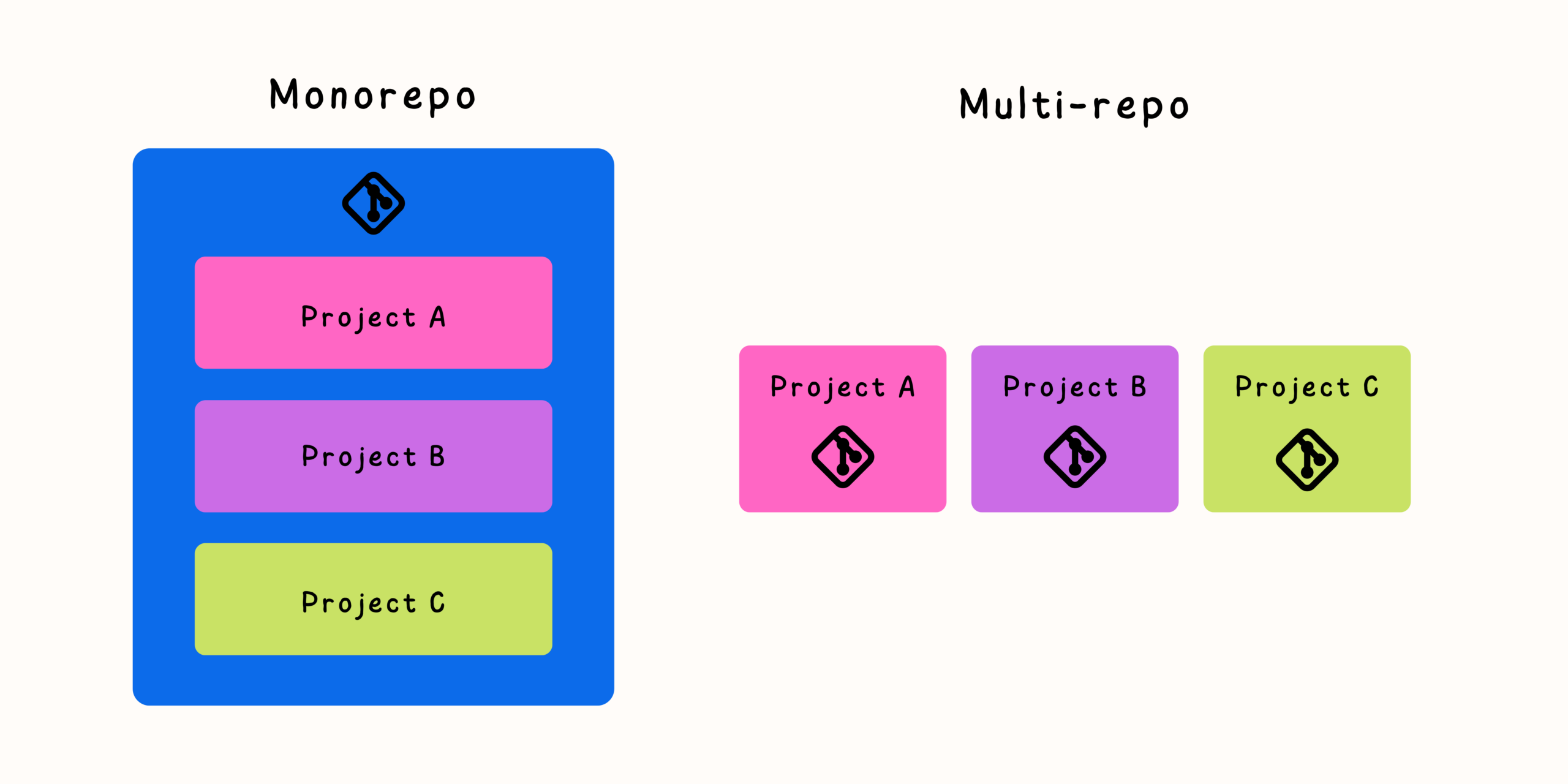
Use Multiple Repositories When:
- Teams need independence.
- Products have separate lifecycles.
- Access boundaries matter.
- Components are loosely connected.
Use a Monorepo When:
- Projects change together frequently.
- Shared code is common.
- Large refactoring happens often.
- Teams need unified visibility.
Use Package-Based Sharing When:
- Components are stable.
- Independent versioning is valuable.
- Consumers should control upgrades.
The repository strategy should match how teams actually develop software.
Common Dependency Management Mistakes
Always Using the Latest Version
This creates unpredictable builds and unexpected changes.
Sharing Code Without Ownership
A dependency without maintainers becomes a bottleneck.
Avoiding Versioning
Without versions, teams cannot control upgrades.
Updating Dependencies Without Testing
A successful build does not always mean compatibility.
Creating Too Many Small Repositories
Excessive separation can increase coordination overhead.
Practical Workflow for Updating Dependencies
A reliable dependency update process may look like this:
- A dependency owner creates a new release.
- Automated tools detect available updates.
- A pull request updates the dependency version.
- Automated tests verify compatibility.
- Reviewers approve the change.
- The application is deployed.
This process creates confidence while keeping dependencies current.
Building a Dependency-Aware Engineering Culture
Tools alone cannot solve dependency problems.
Teams also need shared practices:
- Document dependencies
- Communicate breaking changes
- Review architectural decisions
- Maintain upgrade processes
- Invest in automation
Strong dependency management is both a technical and organizational practice.
Final Thoughts
Managing dependencies between Git repositories becomes increasingly important as software systems grow. The challenge is not simply connecting repositories—it is maintaining reliable relationships between independently evolving components.
Modern teams succeed by combining clear versioning, automated updates, strong ownership, and appropriate repository strategies. Whether using multiple repositories, packages, or a monorepo approach, the goal remains the same: allow teams to move quickly without sacrificing stability.
A well-managed dependency ecosystem turns repository boundaries from obstacles into organized collaboration points, helping teams build, test, and deliver software with confidence.

Related Posts